01
Every small operational process turns into a custom app request.
Operational data apps
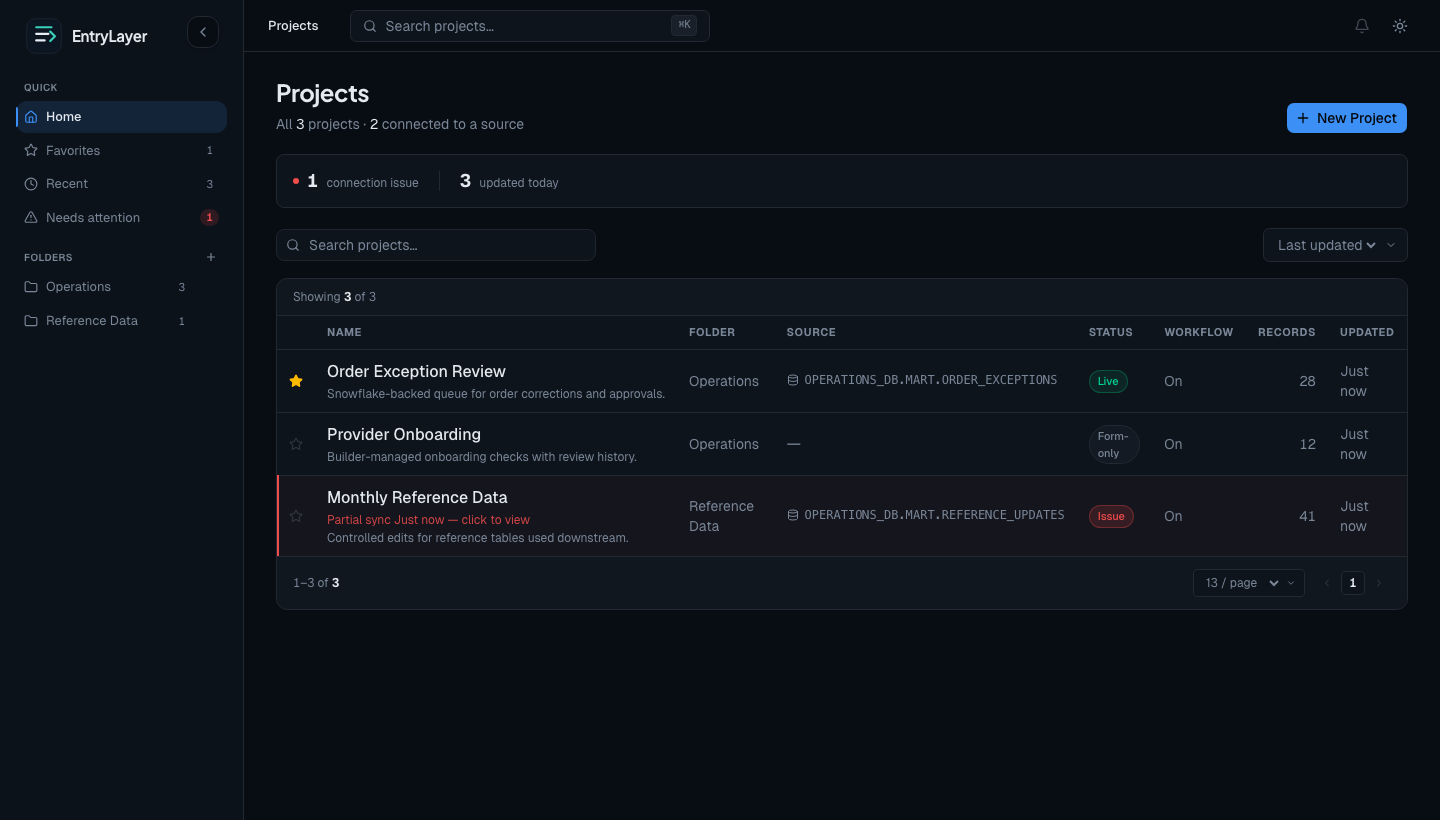
EntryLayer productizes the repeated pattern behind internal data apps: source selection, form generation, work queues, permissions, workflow states, audit history, and extraction.
Best fit
For platform and data teams asked to build app-like workflows around tables that already live in Snowflake.
Every small operational process turns into a custom app request.
Generic internal-tool builders require a separate hosting, security, and data movement story.
Business owners need a focused workspace, not a blank app canvas or SQL worksheet.
EntryLayer outcome
Runtime
EntryLayer is delivered as a Snowflake Native App on Snowpark Container Services, not as a separate hosted SaaS data plane.
State
Projects, forms, submissions, memberships, workflow history, audit activity, and billing ledger state live in Snowflake Hybrid Tables.
Source access
Customer-owned source reads use Restricted Caller Rights where supported, so Snowflake grants and policies remain central.
Next step
The pilot path is intentionally narrow: pick one Snowflake-backed exception queue, create the form and review workflow, and prove the handoff can stay auditable.